
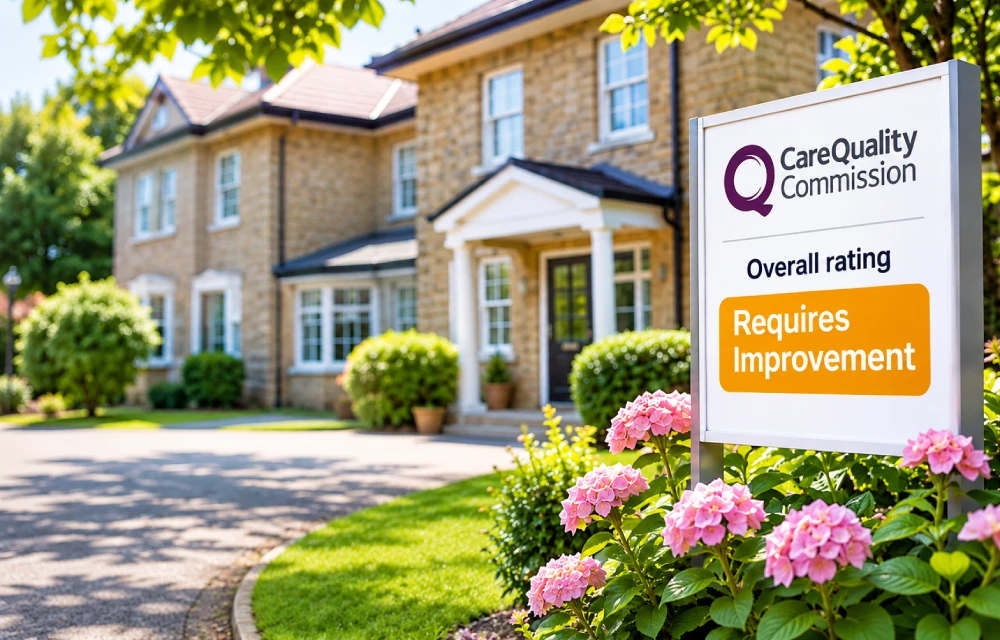
For many owners, a Requires Improvement rating from the Care Quality Commission (CQC) raises an immediate question: can the home still be sold? It is an understandable worry, particularly when the report is public and the pressure on the home is already high.
The answer is yes. A Requires Improvement rating can affect value and narrow the number of interested buyers, but it does not stop a sale. What matters is why the rating was given, what has changed since, and whether the home has strong foundations to build on.
A rating is a starting point, not the full picture
CQC rates every care home as Outstanding, Good, Requires Improvement or Inadequate, based on five key questions: is the service safe, effective, caring, responsive and well-led? An experienced buyer will read the full inspection report, not just the headline rating.
A home rated Requires Improvement because of gaps in governance or record-keeping is a very different proposition from one with serious concerns about resident safety. Understanding which key questions fell short, and why, shapes how a buyer sees the opportunity.
Selling a care home rated Requires Improvement
Requires Improvement is a common rating, and many homes that receive it continue to provide caring, valued support to their residents. In most cases, the report points to specific areas that need attention, such as staffing, audits or leadership, rather than a home that is failing.
For owners, this can be a sensible point to sell. The issues are usually fixable with investment, stronger clinical governance and steady leadership. Being open about the actions you have already taken, and the evidence behind them, helps a buyer understand the home’s real position.
Showing the progress you have made
The period after an inspection is often when the most important work happens. A clear action plan, updated audits, training records and feedback from residents, families and the local authority all show a buyer how the home is responding to the report.
This evidence matters. It helps a buyer see the difference between a home with lasting problems and one that is already moving in the right direction, and it can have a real effect on value. If CQC has re-inspected since, or a visit is due, it is worth sharing that timeline too.
How a lower rating affects value
A lower rating can reduce occupancy, pause local authority placements and make recruitment harder, all of which affect income. But a care home valuation is never based on the rating alone. Location, the building, fee levels, staffing stability and the home’s potential to improve all play a part.
This means two homes with the same rating can be valued very differently. You can read more in our guides to how a Requires Improvement rating affects care home value and what determines a care home’s value. If occupancy is also a concern, our guide to selling a care home with low occupancy explains what owners should know.
Choosing the right buyer
When a home is going through a difficult period, who you sell to matters as much as the price. The right buyer will understand the inspection findings, have a clear plan for improvement and support the existing team through the handover.
At Venet Healthcare, we acquire care homes across the United Kingdom, including homes rated Requires Improvement. We focus on long-term ownership, clinical governance and investment that improve outcomes for residents and families. Find out more about our approach to care home turnaround.
Start a confidential conversation
If you are considering selling, we would welcome a confidential, no-obligation conversation, either directly or through your broker, accountant or solicitor. Contact our team or request a care home valuation for an early view of where you stand.